Stay inspired.
Scroll for helpful tips, stories, and news.
Engineering the Future: Why Leadership Development Must Start Before the Boardroom
As a leadership coach and consultant working predominantly with senior leaders in STEM-driven, male-dominated industries — construction, engineering, biotech, and manufacturing — I spend my time with some of the most intelligent, capable and high-performing individuals in the UK and beyond.
These are leaders who are technically exceptional, commercially astute and operationally tested.
And yet, even at board level, I consistently observe the same pattern:
Brilliance without deeply embedded curiosity
Expertise without adaptive thinking
Authority without emotional regulation
Success without systemic imagination
The issue is not capability.
The issue is preparation.
And preparation begins long before someone reaches the boardroom.
The Education Model Is Designed for a World That No Longer Exists
In Mastery, Tony Wagner argues that our education system is outdated for the realities of the modern economy. He highlights that long-term success depends less on content knowledge and more on:
Critical thinking
Curiosity
Problem-solving
Collaboration
Agility
Initiative
Yet our education system still largely rewards:
Memorisation
Standardised performance
Compliance
Risk avoidance
We are preparing students for predictability in a world defined by volatility.
The future of work — particularly in STEM and AI-driven industries — demands:
Complex systems thinking
Ethical reasoning
Human judgment alongside machine intelligence
Resilience under uncertainty
These are not simply workplace skills.
They are leadership capabilities.
And they must begin in school.
The Brain Window We Are Missing
As a neuroscience-informed coach, I know something critically important:
When we are young, our brains are more plastic, more adaptive, and more open to rewiring.
During school years, students typically have:
Fewer identity constraints
Fewer career pressures
Less fear of failure
Greater cognitive flexibility
This is the optimal window to strengthen curiosity, imagination, and problem-solving capacity deliberately.
Instead, we overload students with content — and underinvest in development.
By the time leaders reach senior positions, organisations are attempting to retrofit capabilities that could have been cultivated 20 years earlier.
That approach is inefficient, costly, and often incomplete.
The STEM & AI Gap Is Not Just a Skills Gap — It Is a Development Gap
The UK continues to face:
Persistent STEM workforce shortages
Underrepresentation of women and disadvantaged groups in technical sectors
Skills mismatches between education and employer needs
Rising demand for AI literacy across industries
Employers consistently report that soft skills gaps appear as frequently as technical deficiencies.
The solution is not simply “more STEM.”
It is:
STEM + AI + Personal Development.
We must develop not only technical competence but also:
Adaptive thinking
Emotional regulation
Communication
Ethical decision-making
Creative confidence
Because while AI will handle data, humans must handle complexity.
Future-Ready Requires System Collaboration
Education cannot solve this alone.
Industry cannot complain without engaging.
Policy cannot be designed without lived insight.
We need a structural partnership between:
Schools and teachers
Universities and colleges
Industry leaders and boards
Policy makers
Parents
Community organisations
Not in isolation.
Not in token advisory roles.
But in active collaboration.
Industry must:
Share real-world challenges with schools
Co-design exposure pathways
Offer enrichment and mentoring
Contribute to curriculum conversations
Education must:
Integrate meaningful AI literacy
Develop problem-based learning
Invest in socio-emotional development
Strengthen inquiry and imagination
Parents must:
Encourage curiosity beyond grades
Normalise experimentation
Support long-term growth over short-term results
This Is About Social Mobility and Talent Preservation
If we fail to broaden access to STEM and leadership development early, we will continue losing talent before it reaches industry.
There is a widening gap between students who access enrichment and those who do not.
This is not just an education issue.
It is an economic risk.
If we want:
Diverse leadership pipelines
Inclusive technical sectors
Sustainable AI adoption
Stronger national productivity
We must invest earlier — and more intelligently.
Engineering the Future Together
Through my work at Engineered Life by Design, one truth has become clear:
The leadership challenges we see in boardrooms are often echoes of developmental gaps from decades earlier.
If we want:
Leaders who think clearly under pressure
Teams that collaborate across disciplines
Organisations that innovate ethically
Cultures that balance performance with humanity
Then we must begin before job titles are formed.
Future-ready is not about coding alone.
It is about curiosity.
It is about problem-solving.
It is about imagination.
It is about developing humans who can navigate complexity — with intelligence and integrity.
I am actively seeking collaboration with:
Industry leaders
Education providers
Career hubs
Policy influencers
Social mobility advocates
AI and STEM organisations
If you believe we must rethink how we prepare the next generation — not just for employment, but for leadership — I would welcome a conversation.
Together, we can:
Close talent gaps
Strengthen social mobility
Align education with future realities
Build a truly future-ready generation
The future is not something we inherit.
It is something we engineer.
With gratitude and purpose,
Dr Susan Izadkhasti
Founder & CEO
Engineered Life by Design

Organisations need conflict to operate
Conflict is “an active disagreement between people or groups with opposing opinion, needs or principle.” _ Cambridge Dictionary
Having worked in diverse work environments across two decades, I have seen conflict at workplaces on a daily basis and realised it is expected. Today 20 years later as a Leadership Development Coach working with the NHS Leadership Academy, and coaching Minority Ethnic Women as part of the NHS Equality, Diversity and Inclusion programme I’ve found conflict management remains a demanding and challenging task for the leaders and their organisations.
It is fascinating to see how people still avoid conflict, though conflict can be a good thing if it has been addressed timely and productively. Conflict is necessary in work environments, it can make the workforce think outside the box, trust and respect one another opinions and help to learn new ways to working together. However, it is when conflict remains unresolved can create a long term consequences for the team members and the organisations. Unfortunately, most people freeze, fight or fly when it comes to the conflict; therefore, they’ll struggle to find a common ground.
Conflict is the normal, inevitable struggle required in teams and organisations. It’s only natural for employees from diverse backgrounds and with different personalities to have varying opinions and beliefs. It’s important to address these differences wisely to avoid longer term effects on engagement, team dynamic and in some cases decreased productivity, motivation and morale. Hence conflict needs to be resolved in work environments in a timely, productive and positive manner. If it remains undiscussed or unresolved there is a risk of building-up issues and escalating to other areas and teams in the organisation. Avoiding conflict at workplaces is more harmful than dealing with each situation, it can decrease trust among team members, create stress and in a long term impact productivity.
Although most managers and leaders tend to dislike and avoid conflict, addressing conflict constructively can improve personal growth, increase trust, respect, empathy, creativity and innovation in the workplace with a positive impact on the organisational culture, maximising productivity.
Now we know how important it is to address conflict immediately, here are some suggestions to what to do when facing conflict at work. The First step is to understand and recognise there is a problem:
Acknowledge conflict and resistance to it is normal.
Be aware of emotions to find values and to be able to create a common ground.
Active listening is a fastest and easiest way to deal with conflict constructively.
Empathise with other people even if you are in disagreement with someone or something.
Problem solving, not arguing by giving a credit to the issue and the person.
How will your leadership and senior managers address conflicts at your work place?
I help leaders to effectively and positively address conflict at workplace on a daily basis. If you would like to know about my leadership development programmes to support you and help cultivate your organisational culture – drop me a message and I will be in touch!
I look forward to hearing from you
How to Manage Perfection?
It is worthy and respectable to want to deliver a quality performance in your role, but to what extent should we aim for perfection at work or in our career?
Perfectionism has always been a big issue for many high achieving professionals, and can be one of the indicators of early success. But certainly this cannot be sustainable for a long period of time and can prevent us from excelling in our career. We have to pace ourselves and make our progression manageable, after all life is a marathon not a sprint.
We are constantly bombarded with social media messages that give the impression everyone’s life is perfect, and they all are thriving at work and in their career. Is that the real picture what we see? Or are the majority faking it to try and make it! I believe more likely is the latter.
In this endless competitive world when each individual appears at competition with the whole world, it is natural if we sometimes feel pressurised to be perfect and obliged to deliver 100% quality. The question is, is that realistic to be perfect all the time? On the other hand perfectionism can be a cause of other destructive habits such as procrastination that can stop us succeeding.
Then what is the solution to this constant battle and how we can stop this unhealthy habit?
To be honest I had suffered from perfectionism for number of years, and I would like to share with you some of the strategies I have used and worked for me to prevent or overcome perfectionism:
– I believe being perfect is very subjective action and I tried to omit the word perfect from my thoughts and conversation.
– Allow myself to make a mistake then I can see that it’s not the end of the world when I fail.
– Set a more reasonable, timely and achievable goal for myself. As a Perfectionist, we tend to set goals that are unrealistic, because of our impossible standards.
– I make sure to be kind to myself and practice self-acceptance, by lowering unrealistic standards I often set for myself. Accept that 80% is good enough and I don’t need to meet 100% to feel complete.
– Be positive and remind myself of my past achievements no matter how small or large they were.
– Try to shift my focus on finding meaning in what I do, rather than trying to do it perfectly.
Does this resonate with you?
Share your thoughts with me, I would love to hear from you!
First impressions count, even virtually!
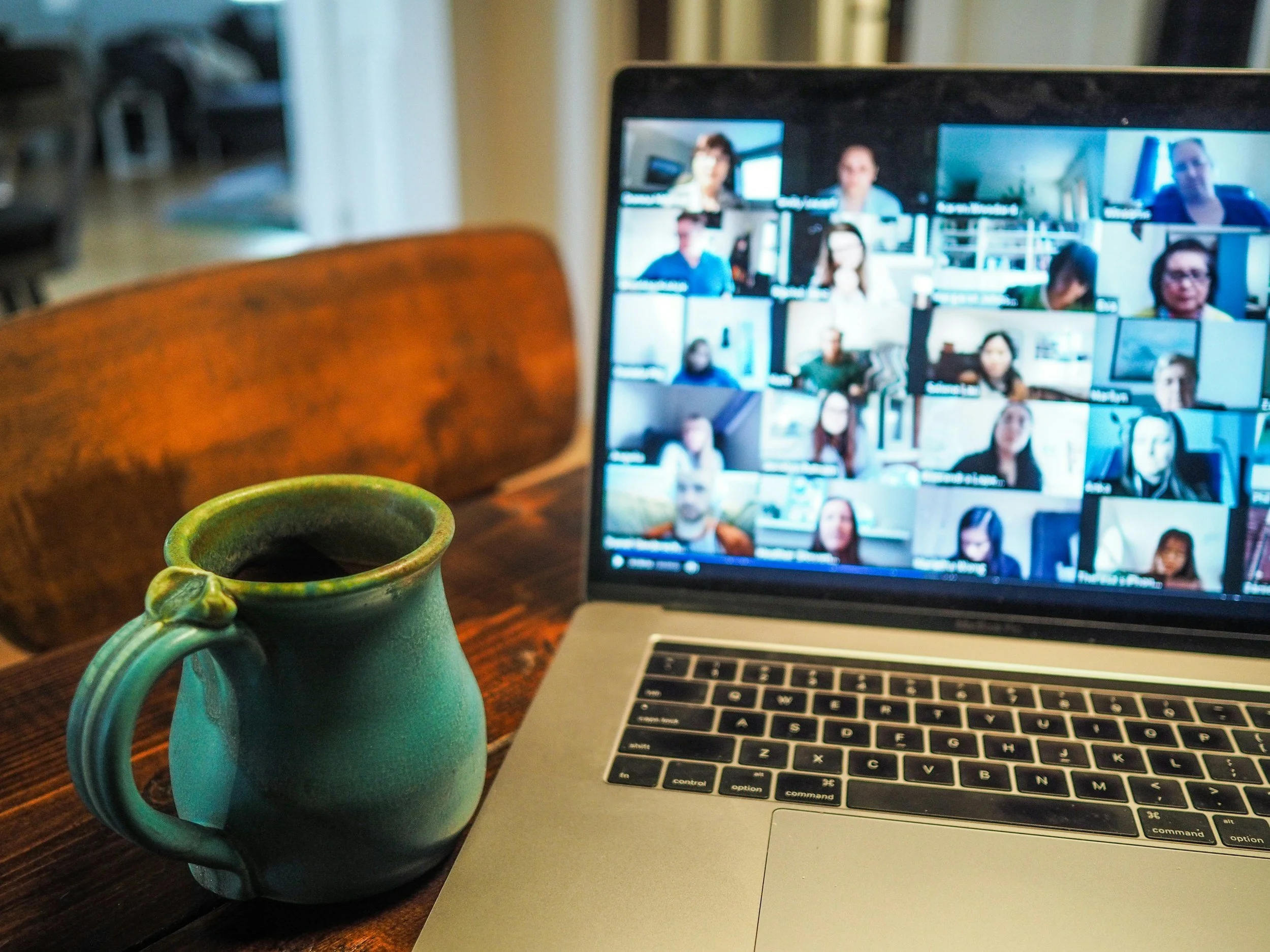
It was a lovely surprise to see my article “How you appear in a virtual meeting, is just as important as in person” featured in the Fightingfifty online magazine in March, you can see the complete article here:
How you appear in a virtual meeting, is just as important as in person
It’s incredible to think that it has been a year since we’ve been dealing with the COVID-19 pandemic and its impact on our lives. That has a massive effect in almost all aspects of our personal and professional routines, lockdowns, isolation, managing our mental health, and many more. It has changed our social behaviours dramatically; we are living in a new world so we must create a new way of life.
As a result of the pandemic and lockdowns, virtual meetings have become part of our daily personal and professional normal, to connect and communicate with one another. Currently many of us spend a big portion of our daily life behind our computer and phone on video calls.
More than one third of UK employees are working from home
The Office for National Statistics’ data shows more than one third of UK employees are continuing to solely work from home, and similar levels in other countries. Working from home is going to continue for most of us until the Covid-19 vaccines are far more widely rolled out and obtainable for more people. Even then some level of home working may continue after the pandemic has finally passed and already some companies have given their staff a choice to work from home “indefinitely”.
Those of us who were not used to remote working had to adjust. There’s no doubt video conferencing has helped substitute personal connections in place of being in the office or meetings. Though while we may be conformable on Facetime with friends and family, when it comes to our professional life some of us prefer to stay behind the scenes and not turning on that video screen and essentially making the meeting a giant phone call. From time to time, we’ve seen some people turn up so casually in their hoodies, old t-shirts or look scruffy, we’ve come to expect the unexpected and I love to see other people’s homes on our calls!
Even if it’s a virtual presentation or meeting, we have to up the game
No matter how you feel about webcams, there are a variety of reasons that make activating them beneficial during the remote workday. Let me preface this by saying we may be not someone who loves to be on webcam. Most days, especially since the coronavirus pandemic hit, we have changed our habits. Little things like wearing little to no makeup, not shaving, or living in slippers and loungewear. If we’ve got a virtual presentation or business meeting, we need to up the game.
Remember back in the pre-corona days when we all used to either go to the office or attend face to face meetings? Where we knew we were going to meet others we used to pay attention to our appearance and made an effort to look presentable.
What has happened since the pandemic?! Do we feel uncomfortable through webcams or are now so used to the casual days or what?! As it may be tempting to stay in your pyjamas or hide behind the scenes, seeing our teammates makes the workday feel more social and connected overall that has a huge impact on our wellbeing and mental health state. Surely, that precious face time is crucial to pick up on facial cues that might deliver some clue about how the other person feels, which leads to clearer communication and better engagement with colleagues.
There are benefits to keeping your webcam on during a virtual meeting
Let’s look at some of the benefits of keeping our webcam on while we are at the virtual meeting and how to keep our sanity.
When the webcam is off, it’s easy to lose focus and instead of paying attention to the meeting you can be encouraged texting a friend or scrolling through your social media feed. When the webcam is on, everyone can see what we’re up to and creates accountability, confidence and trust among the team, which increases productivity and performance.
On the other hand, communication is the heart of our life and video call creates better connections and engagement with others as seeing your team on camera encourages real conversations and interaction and minimises miss-understandings. Communication is easier when you can read what others mean beyond their words. Facial expressions, hand gestures, and other types of body language speak volumes and help us decipher what others really mean. You lose significant context from those non-verbal signs by leaving your webcam off. Seeing what the other person is saying and how they say it clarifies meaning and reduces misunderstandings.
Working from home is isolating, virtual meetings bring people together
Most importantly, lockdown created a sense of isolation and loneliness among us when we can’t see colleagues, friends, and family in person for long lengths of time. Even the most introverted person has found it challenging at some point during the last year to work solely from home with minimal travel and social activities as a break from the routine. Then visual connections with others will minimise any sense of isolation we may feel and will help us to stay sane and maintain our mental health status.
Since everyone is working from home and we are not attending fun events, turning on your webcam also creates opportunities for some fun sessions, where you can share more of your personal life including your pets, kids, or home with others. A little social interaction like this helps team members get to know each other and develop more appreciation for each other.
And at least knowing others can see us will motivate us to get dressed, to look good, and this will help us feel good as we don’t do it often nowadays. Turning on your webcam means you have a compelling reason to try new outfits and look presentable. That can put you in the proper frame of mind for productive work. Consequently, you’ll find it easier to separate your work time from your personal time while you use your home for both aspects of your life.
Be prepared for virtual meetings
We now know the benefits of having our webcam on during those video calls and what we can do and how you turn up in your video call next. Remember, COVID-19 is forced on us and we don’t have much control over it. We can however control our own decisions and our own life by shifting our mindset, connecting with others as much as we can, and help each other through this and help bring people out of it happier, healthier and in a good mindset to meet the new world head-on.
Next time you have a video call set aside 15-30 minutes before the call to prepare yourself both mentally and physically. Try some breathing exercises, meditation or even some stretches to clear your mind, then make some effort to look presentable, not just for others but for yourself! Believe me you will find the difference and feel good for it. After all, virtual calls are the new workplace, and the only difference is the location has been changed!

Take the best out of uncertainty
We are living in a changing world so we must create a new way of life. The COVID-19 experience has transformed our lives and changed all of us in some way. It’s taken away many things, but for some it has also given us time and space to re-evaluate our personal and professional life. It has given us the time to think and reflect, about who we are and what we want, think about work, is this really the job I want to be doing? Am I making the most of my career?
This shift brought new opportunities and it has opened our eyes to the new possibilities that we couldn’t see before. We had to re-adjust our priorities with our new situation and preferences. It made the impossible possible for us!
As lockdowns can bring a much needed flexibility for many people’s working lives. We now know many jobs can be done from the comfort of our home with less stress, saving time and money on commuting, and still get our job done with often even greater productivity, performance and impact to our organisation. We have proven we are far more capable to adapt, be resilient and agile and that we believe in what we are doing, and last but not least we have realised how creative we can be.
The UK Government has predicted that by the end of the furlough scheme, 7-10 million workers will have been furloughed from their job role. With the free time and freedom employees have had to look over their skills and careers, many have been rethinking their work choice and whether they want to return to their job at all or even make a career pivot.
Now with more options available, we may have a greater expectation from ourselves and our employers to get more from our career, roles and organisation. New trends are on rise such as working from home, working part-time, hybrid and flexible working hours or some will decide to start their own business for complete autonomy. Considering we’ll be working about 90,000 hours in our life, it is very important to do what we love and are passionate about!
If you are thinking of changing industries or doing a completely different job, I suggest to take your time and ask yourself the following questions before you make a move;
What made you decide to pursue a career in your industry? This question can help you to understand what has changed since you started your last job that prompted you to seek something new.
How passionate are you about your current role/career? This elaborates on how motivated you are to make a change.
What aspects of your career do you enjoy, and what do you wish you could change or stop entirely? It describes how you want to make an impact and what skills you have that helps you with the execution.
What are your purpose and values? What do you want to get out of your new career? It helps you start seeing what opportunities are out there that align with your values. It is then you can start to create a job search plan around your values and what is important to you, instead of wasting your energy settling for the job you don’t desire.
But what is working is making a purposeful shift in a new, related direction. Here are some useful tips to help you make an informed decision if you are thinking of changing your career:
Think outside the box: You need to step out of your comfort zone and think outside the box. Look at both the personal and professional skills you have, your transferable skills such as training, creativity, natural leadership skills, etc. What are the gaps in your skills, and how can you fill in those gaps? You also need to be clear about your expectations.
Do your search and gather data: I suggest you don’t dive straight into the deep end. Do your homework; you need to do your research and gather some data. Those included job opportunities, companies, trends, and market demands. Consider investigating the desired company’s culture; a good company culture shows that the business is reputation-led, employee-centric, and result-driven.
Map out your journey: Create a list of what you need and draw a clear map of where you are right now and where you want to be, including the small steps you need to take, the timeline, and anyone involved.
Keep good company: Career change is hard and even scary for some; it comes with a lot of uncertainty. But if you surround yourself with positive people who cheer for you, support you, and help you when you need it the most, you tend to accomplish more.
Stay motivated: Motivation is the key to success when you want to change your career. It is very important to ensure that you create a little bit of motivation every day.
With Kindness!

What will the“New Normal” Look like?!
Embrace change like we welcome a new season!
Certainly, our world is a new place with much unpredictability, uncertainty, and complexity. Day by day we are trying to learn and adapt ourselves to what is called the “New Normal””
We may no longer be going to an office; we collaborate with our colleagues and even loved ones remotely. Wearing a mask in public places, we have seen huge changes to our routines over the last few months.
We may need to live in this “New Normal” way of life for a much longer time; who knows! Mental health is an even bigger issue now in these current days. It is vital now more than ever to learn to adapt our behaviour and way of thinking to the new situation.
There has never been a more important time to learn to help cultivate stability, calm, connect with people, and uplift ourselves and others. We can train our mind and change our thinking by shifting the mindset that will help us to adapt quicker to the sudden changes in this ambiguous time.
Connect with me on LinkedIn or Instagram; I love to hear your thoughts!
Let’s work together